
Who Covers the Costs of Non-Emergency Medical Transportation in Ontario
- Aurevia Patient Transfers

- 10 hours ago
- 2 min read
Updated: 8 hours ago
Getting to medical appointments can be a challenge for many families, especially when a loved one requires non-urgent transport such as stretcher transportation or wheelchair-accessible vehicles. Understanding who pays for these services in Ontario can help families plan better and avoid unexpected expenses.

What Is Non-Emergency Medical Transportation?
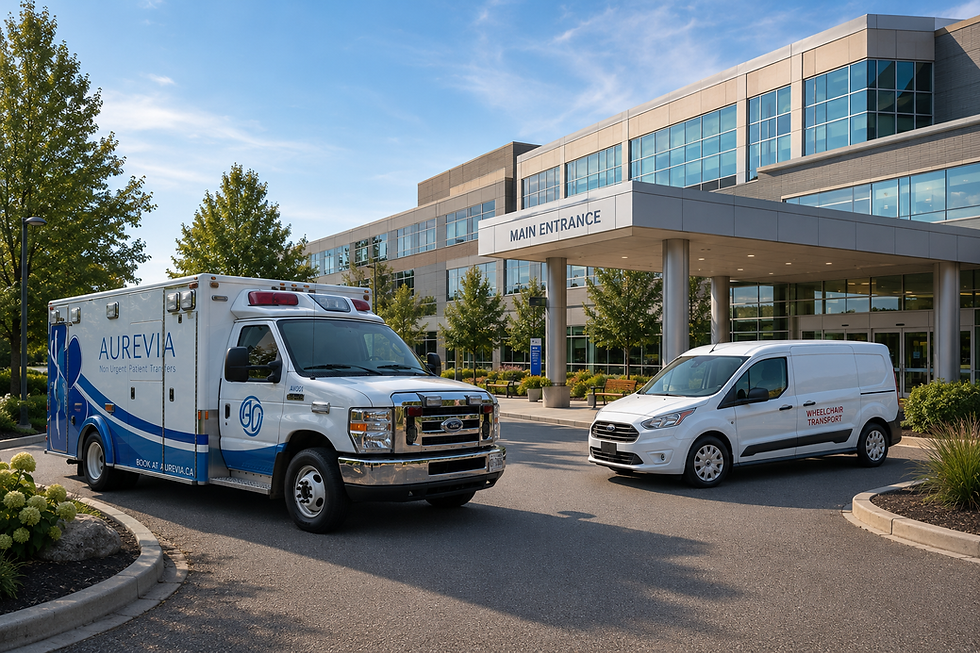
Non-emergency medical transportation (NEMT) refers to travel services for patients who do not require immediate emergency care but need assistance to get to medical appointments, treatments, or hospital discharges. This includes:
Wheelchair-accessible vans
Stretcher transportation for patients who cannot sit up
Ambulatory transport for those who can walk but need help
These services ensure patients reach their healthcare providers safely and comfortably.
Who Is Responsible for Paying?
In Ontario, the cost coverage for non-urgent transport depends on several factors, including the patient’s health condition, financial situation, and the type of transportation needed.
Ontario Health Insurance Plan (OHIP)
OHIP covers some non-emergency medical transportation, but only under specific conditions:
The patient must have a medical need that prevents them from using public transit or regular taxis.
The transportation must be to a covered medical service, such as dialysis or cancer treatment.
The patient’s doctor must provide a referral or certification confirming the need.
OHIP typically covers ambulance services for urgent cases, but may cover stretcher transportation if medically necessary and pre-approved. This varies, case by case.
Local Community and Social Services
Some municipalities and community organizations offer subsidized or free non urgent transport services for seniors and people with disabilities. These programs often include:
Door-to-door shuttle services
Volunteer driver programs
Discounted taxi vouchers
Families should check with their local health integration networks (LHINs) or municipal offices for available options.
Private Insurance and Out-of-Pocket Payments
If OHIP or community programs do not cover the required transportation, families may need to rely on private insurance or pay out of pocket. Some private health insurance plans include coverage for non-emergency medical transportation, but benefits vary widely.
For example, a family member with a private plan might have coverage for stretcher transportation to a rehabilitation center, but not for routine doctor visits.
How to Access Non-Emergency Medical Transportation
To arrange non-urgent transport in Ontario, follow these steps:
Consult the patient’s healthcare provider to determine if stretcher transportation or other specialized transport is necessary.
Obtain a quote from the transportation provider to submit to the insurance company.
Check private insurance policies for coverage details.
Book transportation early, especially for stretcher transportation, as specialized vehicles may require advance scheduling.
Tips for Families Managing Transportation Costs
Keep all medical referrals and documentation handy to support funding applications.
Explore multiple transportation options to find the most affordable and suitable service.
Note that low cost defines the service quality you receive.
Ask healthcare providers about community resources for seniors or people with disabilities.
Understanding who pays for non-emergency medical transportation in Ontario can ease the burden on families caring for elderly or disabled loved ones. By knowing the available coverage options and planning ahead, families can ensure safe and affordable travel to medical appointments.


Comments